
How to Clean Gutters from the Ground Without a Ladder
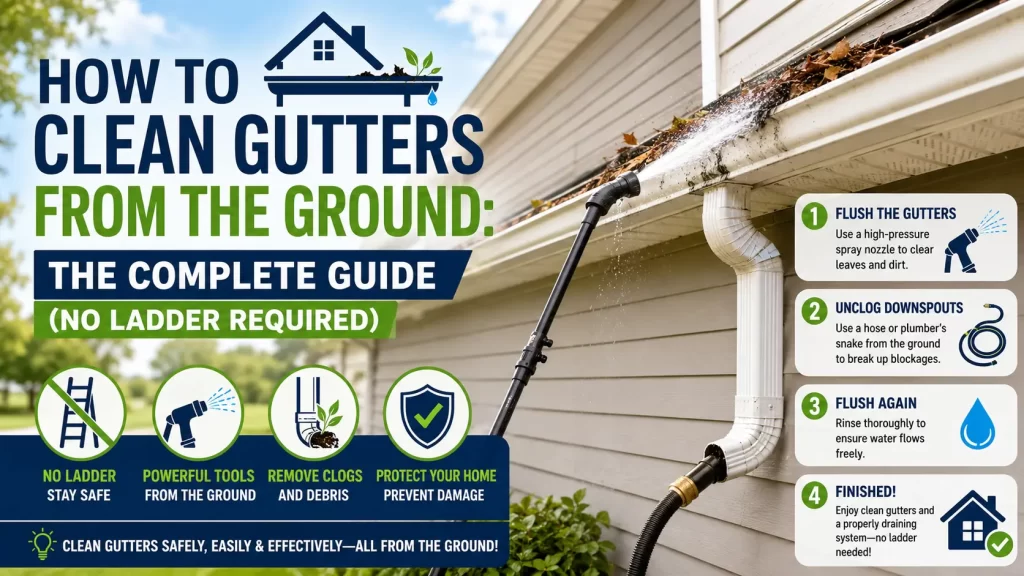
Cleaning gutters is consistently voted one of the most hated home maintenance chores. It usually means dragging a 16-foot extension ladder around the yard, balancing dangerously on uneven ground, and scooping out wet, rotting leaves by hand.
Falling off a ladder is a leading cause of home-improvement injuries in North America. The good news? You do not need to risk a trip to the emergency room just to keep your drainage system clear. You can clean gutters from the ground safely, efficiently, and in a fraction of the time using the right tools and techniques.
This guide breaks down every ground-level gutter cleaning method, step-by-step instructions, tool breakdowns, and safety tips to protect your foundation, roof, and home from water damage.
The 4 Best Ways to Clean Gutters from Ground Level
The best ground-level method for your home depends on two factors: the height of your roof line and the type of debris in your gutters. Wet, compacted mud requires a completely different approach than dry, fluffy autumn leaves.
Here is how the top four methods compare:
| Method | Best For | Required Equipment | Key Advantages | Potential Limitations |
| Telescoping Hose Wand | Flushing light dirt, small twigs & dry leaves | High-pressure curved hose wand, garden hose | Easy setup, flushes entire system into downspouts | Messy; can splash dirty water onto home exterior |
| Wet/Dry Vacuum Extension | Heavy, wet leaves, sludge & standing water | Shop-vac, rigid U-bend vacuum extension kit | Pulls heavy debris directly into vacuum tank without mess | Vacuum hose can clog on thick sticks; heavy setup |
| Leaf Blower Attachment | Dry autumn leaves & loose pine needles | Gas or cordless leaf blower, rigid U-bend blower kit | Extremely fast; clears 50 feet of gutter in minutes | Blows debris all over the lawn; useless for wet mud |
| Telescoping Scoop / Rotary Brush | Targeted manual clearing & heavy debris | Mechanical extension pole, manual gutter claw or brush | Direct removal without using water or air pressure | Requires patience; harder to monitor work without a camera |
Method 1: The Wet/Dry Vacuum Attachment (Best for Wet Sludge & Heavy Leaves)
If your gutters are filled with heavy, waterlogged leaves and dark compost, high-pressure air or water will only make a massive mess. A shop-vac attachment is the cleanest and most effective solution.
Equipment Needed:
- Wet/dry shop-vac (minimum 4.0 peak HP recommended)
- Rigid U-shaped gutter vacuum extension kit
- Safety goggles and heavy work gloves
Step-by-Step Instructions:
- Assemble the Extensions: Connect the rigid tubes to reach your roof line while standing comfortably with both feet flat on the ground.
- Hook the Nozzle Over the Rim: Position the curved U-bend nozzle directly over the edge of the gutter trough near your downspout.
- Turn on the Vacuum: Move slow and steady along the length of the gutter. You will hear and feel heavy debris being sucked down into the vacuum tank.
- Clear Blockages: If the airflow drops, the curved nozzle may have snagged a large twig. Lower the tube and clear the nozzle tip manually before continuing.
Method 2: The High-Pressure Telescoping Hose Wand (Best for Flushing & Dirt)
When you need to remove dirt buildup, shingle granules, and light leaf litter, water pressure is your best friend.
Equipment Needed:
- Telescoping gutter washer wand (extends up to 12–16 feet)
- Standard outdoor garden hose
- Hose shut-off valve (for quick pressure adjustments)
Step-by-Step Instructions:
- Hook Up the Water Line: Connect the telescoping wand to your garden hose with the shut-off valve at the handle end.
- Angle the Blast: Point the curved spray nozzle down the channel toward the downspout opening.
- Flush in Short Strokes: Turn on the water and push debris ahead of the spray stream. Move methodically from the farthest corner toward the downspout.
- Confirm Downspout Drainage: Look at the bottom of the downspout extension to make sure water is flowing out freely and clear of mud.
Method 3: The Leaf Blower U-Bend Kit (Best for Dry Leaves)
If you live in an area surrounded by oak or maple trees in the dry autumn months, a leaf blower attachment clears gutters faster than any other method.
Equipment Needed:
- Cordless or gas-powered leaf blower
- Universal leaf blower gutter extension attachment kit
Step-by-Step Instructions:
- Attach the Rigid Pipes: Secure the snap-fit tubes to your leaf blower nozzle, ensuring the top curve angles directly downward into the gutter trough.
- Blast Debris Out: Turn the leaf blower on high speed. Walk at a steady pace beneath the roofline, allowing the downward air stream to blast dry leaves out of the trough.
- Rake the Yard: Because this method scatters debris across your lawn and driveway, finish the job by raking up the fallen leaves.
How to Clean a Clogged Downspout from the Ground
A clear gutter trough is useless if the downspout is jammed solid with pine needles and dirt. Water will overflow, leading to roof rot, cracked foundations, and basement flooding.
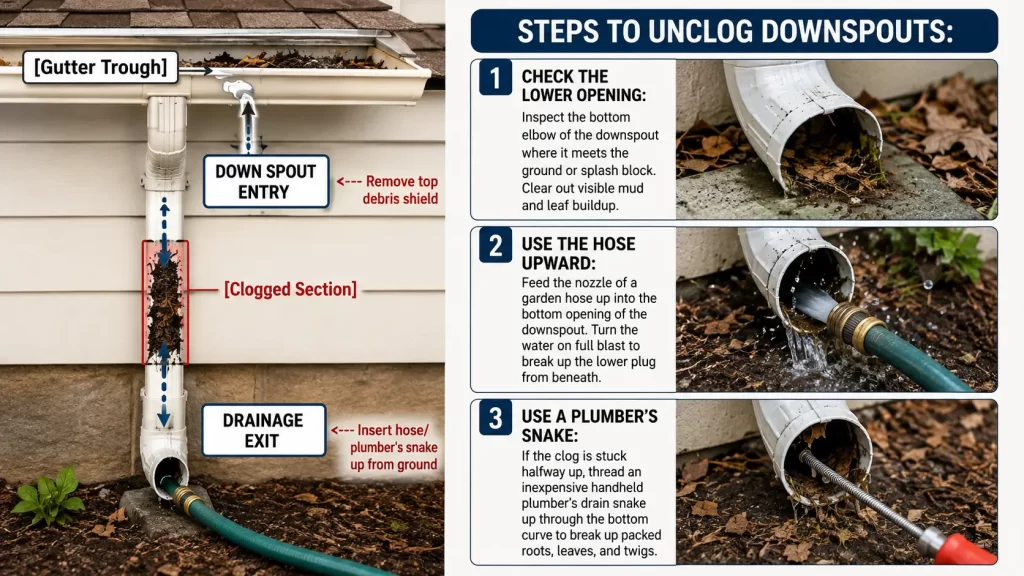
Steps to Unclog Downspouts:
- Check the Lower Opening: Inspect the bottom elbow of the downspout where it meets the ground or splash block. Clear out visible mud and leaf buildup.
- Use the Hose Upward: Feed the nozzle of a garden hose up into the bottom opening of the downspout. Turn the water on full blast to break up the lower plug from beneath.
- Use a Plumber’s Snake: If the clog is stuck halfway up, thread an inexpensive handheld plumber’s drain snake up through the bottom curve to break up packed roots, leaves, and twigs.
Safety Guidelines for Ground-Level Gutter Cleaning
Even though your feet remain firmly planted on the grass, ground-level gutter cleaning comes with specific safety risks that homeowners must prepare for:
- Watch for Overhead Power Lines: Metal and aluminum extension poles are highly conductive. Always maintain a minimum 10-foot clear zone from electrical drop lines running to your house.
- Wear Eye & Head Protection: Working directly underneath gutters means dirt, water drops, and heavy debris will fall straight down. Always wear protective safety goggles and a hard hat or brimmed cap.
- Beware of Leverage Strain: Extended 12-to-16-foot poles act as large levers. Hold equipment close to your body’s center of gravity and keep a solid, wide stance to prevent back and shoulder strain.
- Inspect Ground Stability: Never stand on wet, slippery decks, uneven garden rocks, or muddy slopes while operating long extension equipment.
Summary Checklist: Keep Your Gutters Clean Year-Round
- Spring: Clean out fallen seed pods, oak blossoms, and winter grit using a wet/dry vacuum kit.
- Fall: Blast away dry leaves twice during peak foliage season using a leaf blower attachment.
- Winter Prep: Flush downspouts with a high-pressure hose wand before the first freeze to prevent ice damming.
- Post-Clean: Install stainless steel mesh gutter guards to reduce ground cleaning to once per year.
Frequently Asked Questions
Can I clean gutters from the ground without using a ladder?
Yes, you can clean standard single-story and many two-story gutters from the ground using a telescoping gutter-cleaning pole, high-pressure hose wand, wet/dry vacuum extension, or leaf blower kit. Ground-level cleaning eliminates ladder fall hazards, though it can be less effective when gutters contain thick, compacted mud or heavy tree root growth.
What is the best way to clean gutters from the ground?
The best method depends on the debris type. A telescoping hose wand is ideal for light dirt and small twigs, while a wet/dry vacuum attachment is best for removing wet leaves and heavy sludge without spraying dirty water over your home’s exterior walls.
How do I clean a clogged gutter from the ground?
Start near the downspout to locate where water is backing up. Use a shop-vac equipped with a rigid U-bend extension to pull out packed blockages. If pine needles or dirt have formed a hard crust, use a high-pressure curved hose wand to break up the mass before flushing the downspout.
How do I know if cleaning my gutters from the ground is safe?
Check for stable footing, stay well away from overhead electrical wires, and avoid working on high-wind days. Long extension poles become top-heavy and difficult to handle at full length. If you cannot maintain control of your equipment or inspect the trough, stop and consider hiring a professional.
When should I hire a professional instead of cleaning my gutters from the ground?
You should hire a professional gutter cleaning service when your home is three stories or taller, when downspouts remain blocked after high-pressure flushing, or if you notice sagging gutters, pulled fascia boards, or structural foundation leaks.